








Nov 2 to 8, 2026
Unlearn Radar Week 4
We're getting pretty good at making coding agents do things. The harder question is whether the things we're doing actually make them better.
 Alex Garrett-Smith · Nov 3
Developer education for the AI era
AI solved the easy half of your job. Unlearn trains the other half, so you build better software and grow as an engineer.
 2:14 / 5:48
 Spec a Product
 OpenSpecDesign a Feature
 Build Features
 Review AI Code
 TLDR · 4:55Why AI Needs Evals, Not Vibes
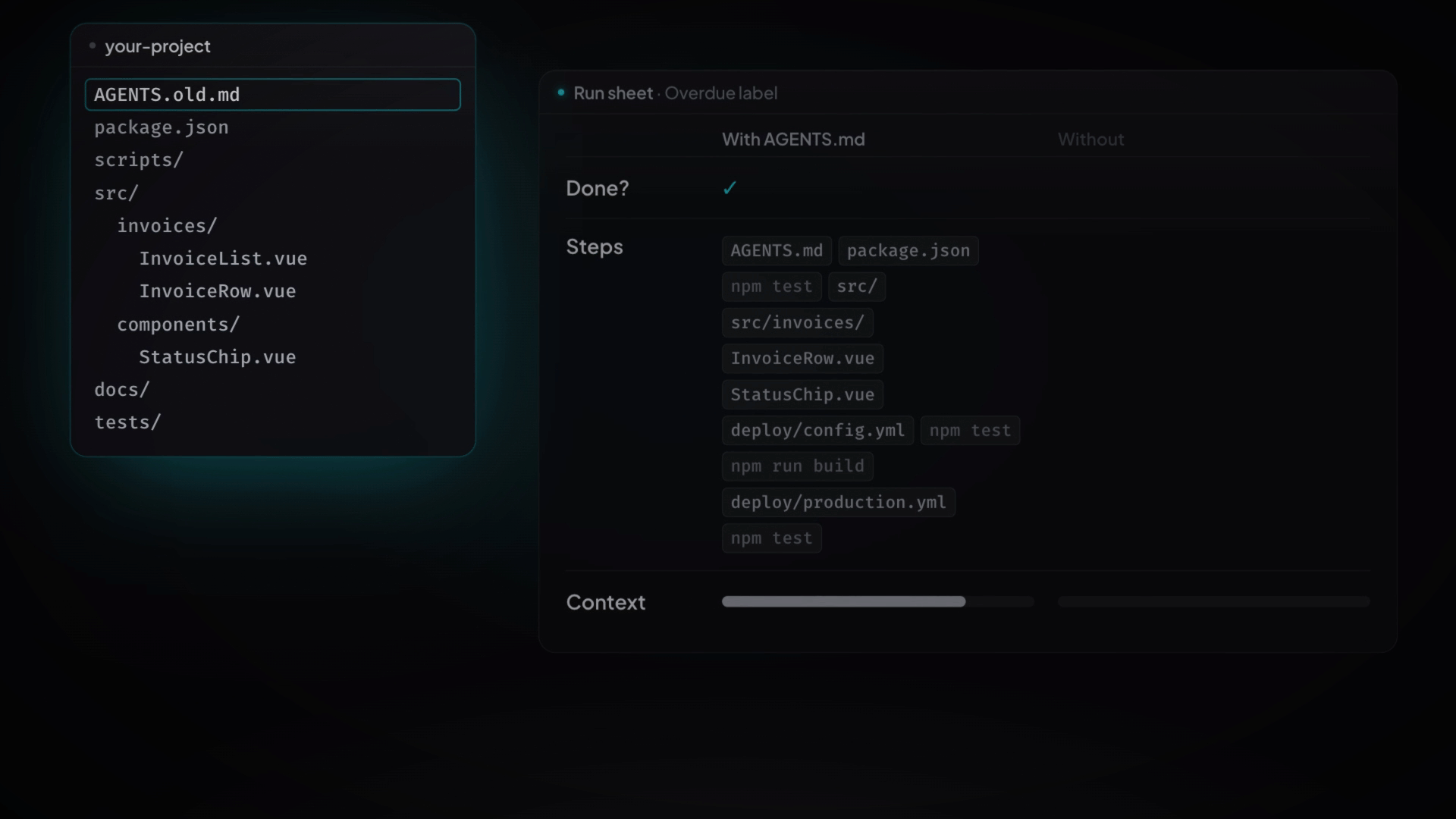 TLDR · 4:47The Agent Doesn't Need to Know Everything
 LiveSpec-Driven Development: From Idea to Production with AI
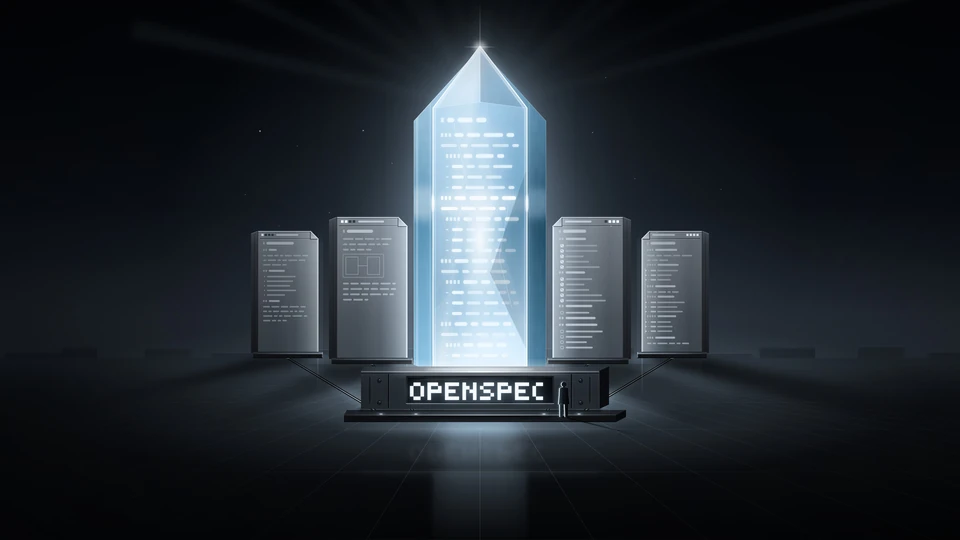
Turn a vague idea into a detailed product spec
npx skills add unlearndev/skillsCopyFrom the team that trained 2,000,000+ developers at
Every course opens with a free lesson.
Workflow · 33mSpec a Product Before AI Builds ItFree Full course · 1h 7mThe Future Proof Dev: An Intro to AI for Web DevelopersFreeWorkflow · 24mDesign a Feature AI Can Execute Without GuessingPlusWorkflow · 1h 38mBuild Features with an AI AgentPlusDeep dive · 56mSpec-Driven Development with OpenSpecFree
 Full course · 2h 22mTurbo Mode: Optimizing Productivity with AI Tools and AgentsPlus
What changed this week, and what's worth your time. Free for everyone.
Nov 2 to 8, 2026
We're getting pretty good at making coding agents do things. The harder question is whether the things we're doing actually make them better.
Alex Garrett-Smith · Nov 3
Comparison · 5 min read
Routing PR reviews by size and risk saves money and waiting on small changes; I'd start with one model and route once the bill or the wait matters.
TLDR · 4:55
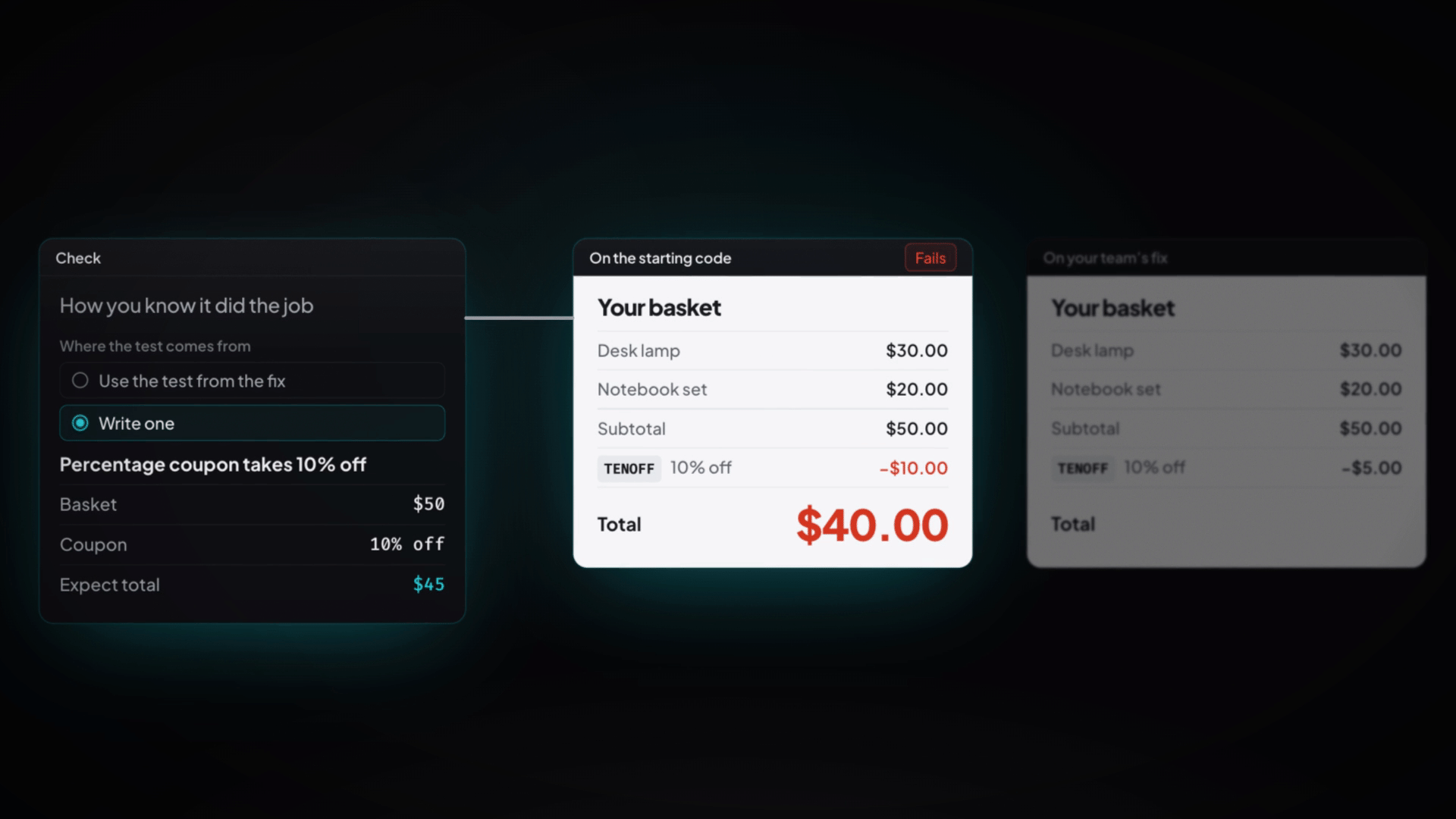
An eval runs your agent on the same tasks several times and checks every result, so you can compare the pass rate before and after a change.
TLDR · 4:47
The agent reads AGENTS.md on every task, so keep only what it can't find in the code, and move notes that only some tasks need into their own files.
Coming soon
A weekly episode with Alex Garrett-Smith on new releases, new tools, and what they mean for how you work.
Long conversations with engineers who changed how they work with AI.
Which engineer are you becoming? A role is a route through the courses in the order you use them, and finishing it earns the role certificate.
Own what gets built and how, end to end, with agents doing the typing.
For decades the code was the bottleneck, so the work got split. Someone wrote the ticket and someone else typed it out. Agents made the typing nearly free, and the gap between the two is where things break now. A product engineer closes it, turning a product goal into a spec an agent can't misread, directing the build, and owning what ships.
9 steps 78 lessons The Product Engineer certificate

Calling a model takes one line. Making it reliable inside a real product, with retrieval, evals and an interface that holds up, takes an engineer.
Agents follow whatever structure they find. Architects design systems where the right change is easy and the wrong one is hard.

Most automation doesn't need a model. You know when a script or a hook will do, put agents only where the work needs judgment, and build pipelines that run on their own.

Tools don't change teams, habits do. You take a team from skeptical to effective without letting quality slip.

When the code writes itself, how it feels becomes the product. Design engineers shape the experience and ship it, with no handoff in between.
In this lesson, you'll take your rough specification and turn it into something far more solid by removing assumptions, adding missing details.
Synced to the video; select a line to jump there.
Questions about this lesson show up here.
That's the loop. A platform you work alongside, not a library you never finish.
The skills and starters from the courses, free and open source.
Spec generator, code review, ship gate, triage and more, installed into any coding agent.
npx skills add unlearndev/skillsShort, opinionated posts on working with agents.
A company that teaches developers for a living, and the engineer who leads the curriculum.

We've been teaching developers since 2017, and more than 2 million of them have learned with us. We run FrontendNation, one of the biggest online dev conferences out there, and the official Vue.js and Nuxt certifications, built hand in hand with the people who created those frameworks.
Unlearn is all of that, pointed at the part of the job AI changed.





Alex Garrett-Smith, Technical Education Lead at BitterBrains.
Built Codecourse into a 300,000-subscriber channel and a full learning platform, acquired in 2025. Now leads the curriculum and judgment frameworks behind Unlearn. Sixteen years teaching developers how to build, now writing the playbook for what comes next.
Free gets you started. Plus gets you everything.
Start free today, and upgrade to Plus when you want every course and every role.
Rather not make an account yet? The weekly Radar can come to your inbox instead. Get free content
No. Lesson 1 of every course is free without an account, and so are the Radar, the tutorials and the open-source tools. A free account adds selected courses in full and role progress, with no card. Plus unlocks every course, every role and the Unlearn apps.
Yes. The judgment applies to any stack and any AI tool. For the setup, the AGENTS.md starters cover 13 stacks, including Laravel, Nuxt, Next.js, Rails and SvelteKit, and the skills install into any coding agent with one command.
A route through the courses in the order you use them, built around the engineer you're becoming. Finish every step and you earn the role certificate. Product Engineer is live, and five more roles are on the way.
Using AI and trusting what it hands you are two different skills. In a survey of 3,080 developers, 44% rated themselves average at judging AI output. They ship faster and second-guess more.
If you already lean on AI, you'll get more out of Unlearn than someone just starting, because you're already making the calls it trains.
Most of them teach a tool, and the tool changes next month. Unlearn teaches the calls you make around it, like what to spec, what to hand off, and what to reject in review. The tools part stays current too, because new courses and tools keep shipping.
If you're senior, you'll move through the principles fast and spend your time where it pushes you, like context engineering, spec-driven development and reviewing AI-written code. If you're earlier in your career, every course starts with the principle before the tool, so you build the judgment that usually takes years of mistakes.
Lessons run under seven minutes on average, and each one ends with something you use on your own project the same day. You don't have to finish a course to get value. One lesson on reviewing AI-written code changes how you read the next PR.
Questions about billing, teams or refunds? See pricing.